Ceramics Knowledge
From clay to bowl, from bone-ash content to lead limits. This is where the craft, the materials and the vocabulary get explained — with every key figure sourced so you can check it.
Craft & materials
Four long reads covering the production chain, material identification, glaze and decoration, and trade vocabulary.
From Clay to Porcelain: How Many Steps a Bowl Takes
Dailyware production is one continuous physical-chemical chain: batching, forming, drying, bisque firing, glazing, glaze firing, decoration, inspection, packing. Lose control of temperature, moisture or particle size at any stage and the finished piece shows it. This guide walks the real production order and explains what each step does.
Read more →MaterialsBone China, High-White, Strengthened and Stoneware: The Real Differences
Two white bowls can differ tenfold in price. This guide separates the four main dailyware families by recipe, firing and verifiable indicators — and explains why “new bone china” is not bone china, and how national standards let you check a supplier's claim.
Read more →GlazeGlaze and Decoration: How an Oil-Spot Grows
A glaze is a layer of glass fired onto clay. It governs touch, gloss and wear resistance, and it places a piece within an aesthetic lineage. This guide explains what glaze is made of, how Huairen's signature black-glaze oil-spot and kiln-transmutation effects actually form, and where the practical limits of daily care lie.
Read more →GlossaryCeramics Glossary: Reading a Quotation and a Test Report
Ceramics vocabulary comes largely from the workshop floor and from national standards, which makes it easy to get lost on first contact. Terms are grouped here into process, material, defect and trade sets, in Chinese and English, so both sides can align language during inquiry, sampling and inspection.
Read more →The region
Where Huairen came from, and what it makes now.
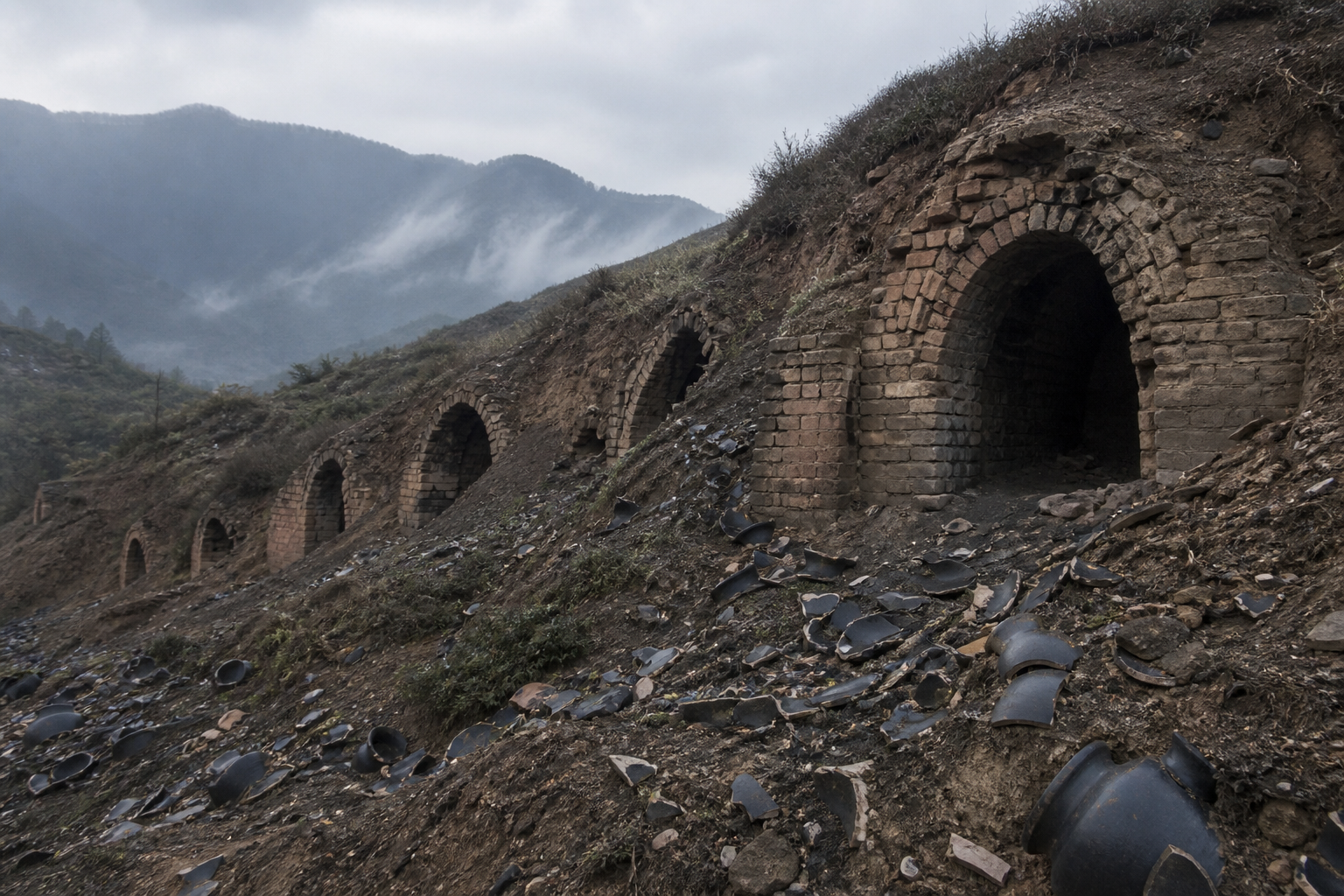
Huairen Ceramics History: From Kiln Fire to Northern Tableware Capital
Huairen’s porcelain story spans early pottery clues and Liao-Jin kiln systems; black glaze and oil-spot bowls are the strongest cultural signature, with Ming-Qing trade peaks and the Datong Nine-Dragon Screen memory. Compiled from municipal, Xinhua, local history and public connoisseurship sources.
Read more →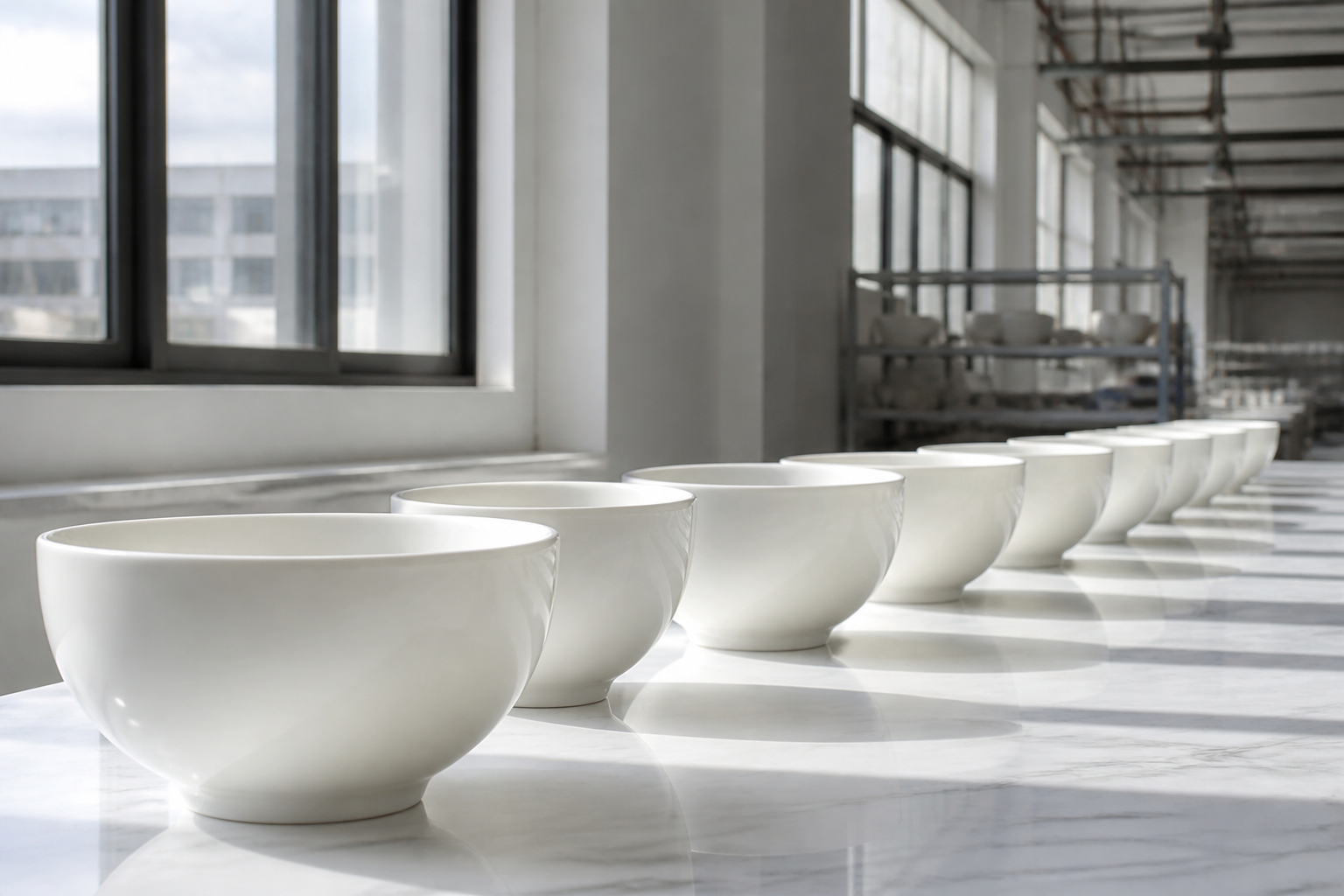
Modern Huairen Ceramics: Industry, Specialty Town, Ecommerce
From state plants and institutes to private clusters, a provincial specialty town, export bases and ecommerce e-towns — Huairen’s modern northern tableware structure.
Read more →A clear brief gets an accurate quote
Bring use case, quantity, material and target market — we route it by category to the right kiln in the district.