Huairen Ceramics History: From Kiln Fire to Northern Tableware Capital
Huairen’s porcelain story spans early pottery clues and Liao-Jin kiln systems; black glaze and oil-spot bowls are the strongest cultural signature, with Ming-Qing trade peaks and the Datong Nine-Dragon Screen memory. Compiled from municipal, Xinhua, local history and public connoisseurship sources.
Geography: kiln fire beyond Yanmen Pass
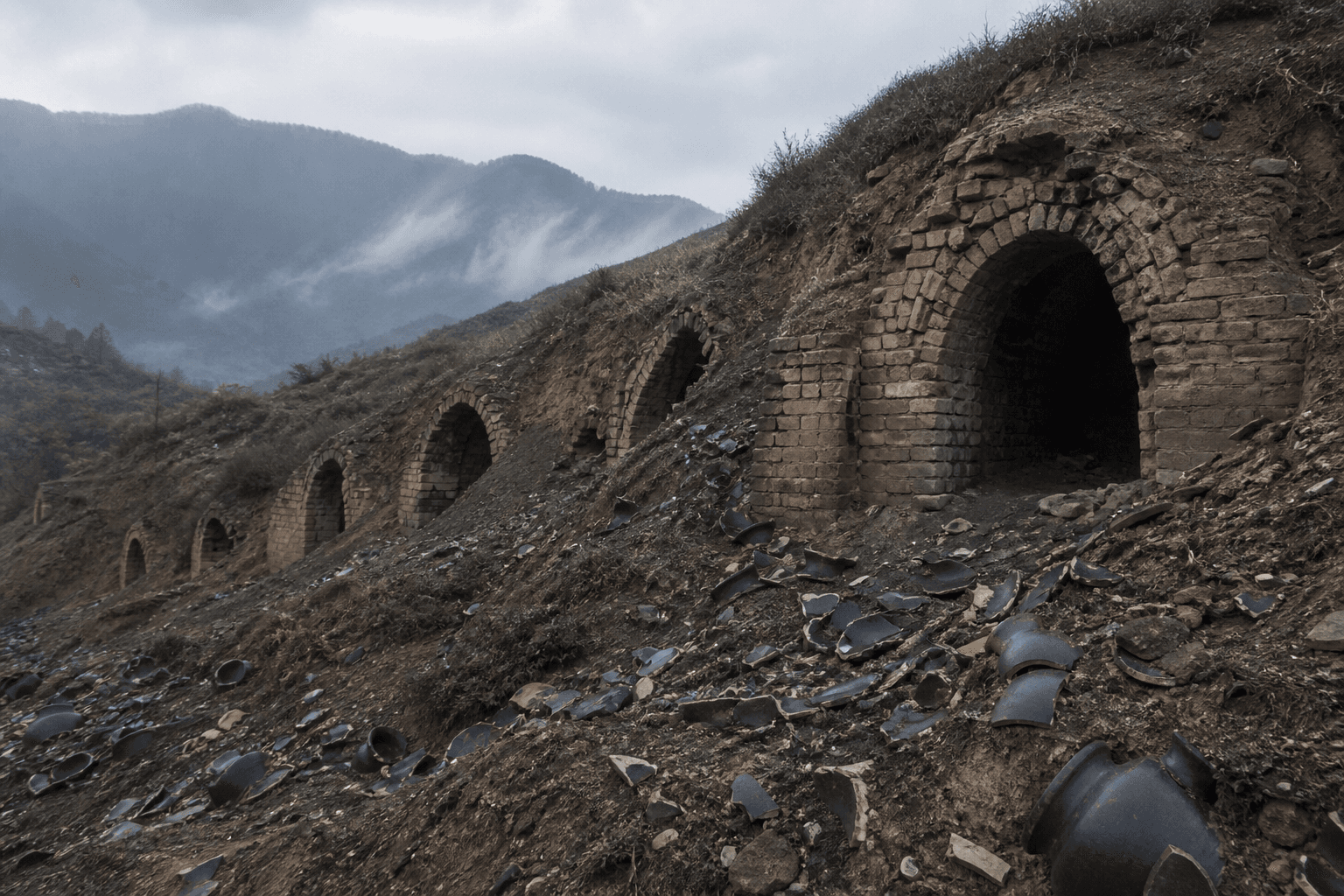
North of Yanmen Pass, clay and fuel supported long-running porcelain production. Local surveys around Xiayu reported early pottery remains and firing traces. The Ming geographical text notes old kilns at Jinping Mountain southwest of Huairen. Public materials such as the industry association’s Huairen Ceramics History place clearer documentary and material evidence from the Liao-Jin period, with sites at Zhangwagou, Xiaoyu and Wujiayao under the name “Huairen kiln.”
Liao-Jin to Yuan-Ming: black glaze, oil-spot, dailyware
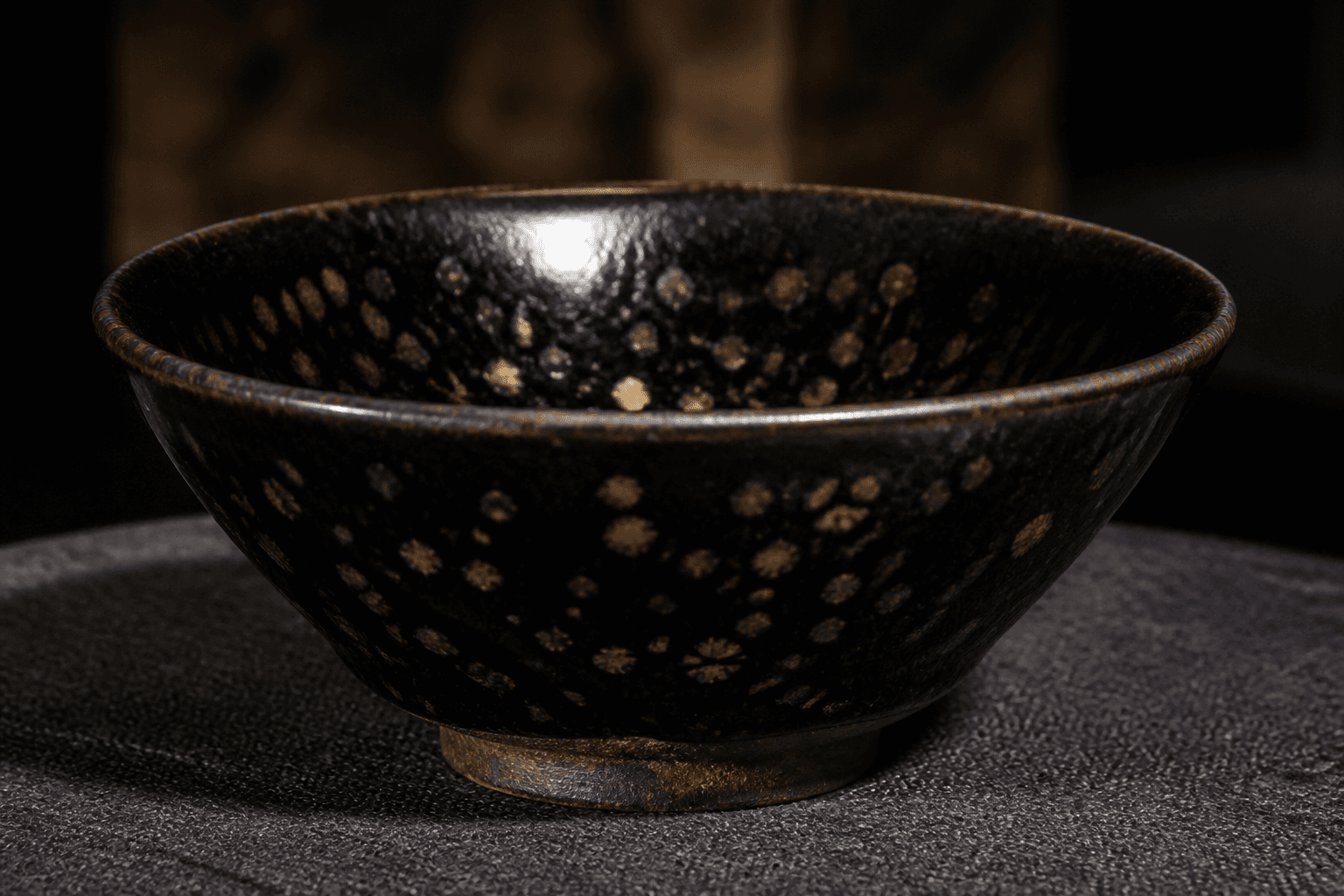
In Liao-Jin times, trade and tea/wine culture around Datong boosted porcelain demand. Huairen kilns are known for lustrous black glaze, bold utilitarian forms, coarser bodies with refined glaze, plus pieces such as chicken-leg flasks. Public reports and museum narratives highlight oil-spot black-glaze cups with dense speckles; Song “hare’s-fur” bowls and Yuan “maple-leaf” bottles are often cited as representative finds. Decorations include bold carved and cut patterns with Yanbei character.
Huairen oil-spot bowls: a northern crystalline-glaze signature
“Oil-spot” is a descriptive name for a crystalline glaze whose speckles may appear silver-white, grey or reddish. Public connoisseurship notes that oil-spot is not unique to Fujian’s Jian kiln: northern kiln systems also made oil-spot blackwares. A common contrast is Jian spots tending larger and uneven, northern spots smaller and denser. Huairen sits in the Datong coal basin; historical coal firing and relatively stable temperature control are often cited to explain full, orderly, bright oil spots. The popular formation account is a bubble mechanism: as glaze melts, iron-oxide bubbles gather and break, bringing iron-rich phases to the surface that crystallize on cooling. The firing window is narrow, so oil-spot historically appeared with blackware production rather than as a dedicated modern line. Museum contexts (including Shanxi-attributed oil-spot dishes) and local exhibition/heritage narratives still treat oil-spot bowls as the cultural bridge from Liao-Jin kilns to today’s northern tableware capital.
Sohu public essay: appreciating Huairen oil-spot bowls (summarized) ↗
Xinhua: oil-spot bowls as a public emblem of Huairen ceramics ↗
Ming-Qing peak: frontier trade, Nine-Dragon Screen, northern renown
Ming-Qing Jin merchants moved porcelain north with tea and silk; under the “Tea Road” context, local kilns peaked. Reports describe dense old kilns above Wujiayao. A Qing local gazetteer praises pottery skill as unmatched in the north. Public ceramic histories credit Wujiayao’s Zhao workshop with firing the Ming Datong Nine-Dragon Screen, among China’s largest single-face glazed screens. Late Qing and Republican decline set up later industrial revival.
Media: official and press views of Huairen kilns
Xinhua’s specialty-town micro-video series covers Huairen ceramics (“ancient kilns renewed”). Below is an embed of a public Chinese porcelain documentary on Bilibili for broader kiln-civilization context; for Huairen-specific facts prefer municipal and Xinhua originals.
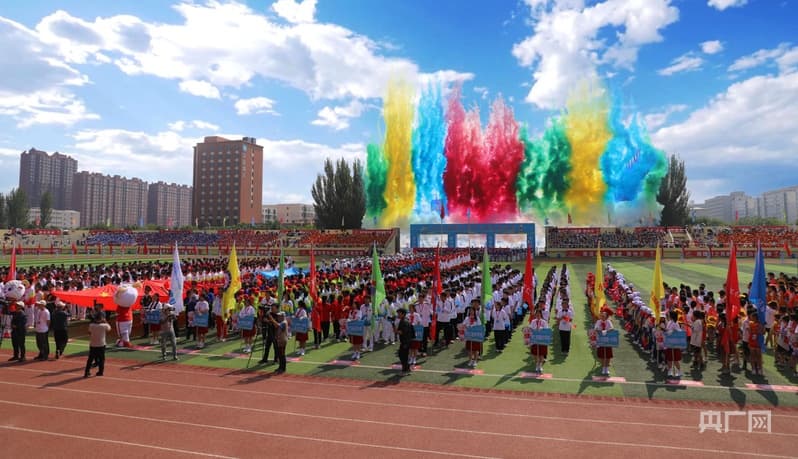
Xinhua micro-video entry: Huairen ceramics renewed
Official report page for the specialty-town episode on Huairen ceramics
Further watching: documentary China · Porcelain (civilizational context)
Not Huairen-specific; background on porcelain trade and aesthetics
Intangible heritage and kiln lore
Huairen ceramic craftsmanship appears in Shanxi intangible-heritage public listings. Local materials mention kiln-god rites and trade customs such as a second-day-of-second-month pause. Historically wares were rugged utilitarian porcelain; modern industry expands into bone china, hotelware, packaging and cultural giftware.
Timeline
- 史前—早期Early pottery/firing clues around Xiayu support a long ceramic identity.
- 辽金Huairen kiln sites clarify; black-glaze dailyware thrives, oil-spot bowls mark northern crystalline glaze.
- 元明Kilns continue; architectural glaze and frontier exchange run in parallel.
- 明清Jin merchant trade peaks the craft; northern renown and Nine-Dragon Screen narrative solidify.
- 近代转折Late decline sets the stage for post-1949 industrial revival.