Sourcing
Sourcing Huairen Ceramics at Volume: Inquiry to Shipment
This page is for buyers placing volume orders, running OEM programmes or organising export. It covers the full eight-step process, a specification checklist you can copy, how MOQ and price are actually built up, and the lead and cadmium limits for the Chinese, EU and US markets. Every standard number here is checkable.
Updated 2026-08-13
Eight steps: what an order actually goes through
The clock in volume ceramics purchasing is spent on sample approval and kiln scheduling, not on negotiating price. Get the first two steps right and the remaining six are largely a matter of sequencing. Step three deserves particular care: the sealed sample is the reference that settles every later dispute, so both sides should retain and sign one after approval.
Send the inquiry
State use case, quantity, material, target market and required delivery date. The more specific the brief, the closer the quote is to the final price.
Selection and quotation
Match the category to kilns in the district, confirm shape, material, decoration method and packaging, then quote.
Sampling and sealing
Produce a confirmation sample and verify shape, glaze, pattern and backstamp. Once approved it is sealed and retained as the acceptance benchmark.
Compliance and testing
Define the test scope by destination market and obtain reports such as lead and cadmium release. Dailyware bound for the US additionally involves a producer certification arrangement.
Factory audit (optional)
Before a large order, review capacity, quality systems and compliance on site; a remote video audit can be arranged instead.
Mass production
Scheduled into forming and firing. Duration depends on shape complexity, decoration method and current kiln availability.
Inspection and grading
Batch inspection against an acceptance quality limit under GB/T 2828.1, with defect judgement referencing GB/T 3303 and GB/T 3301.
Packing and shipment
Packing, marking, transport and storage follow GB/T 3302; drop and stacking design drive the arrival breakage rate.
Specification checklist: put these in the inquiry
Almost all uncertainty in a ceramics quote traces back to an underspecified brief. The checklist below can be copied straight into an inquiry; once it is filled in, the price a producer returns is usually executable without repeated rounds. Replacing adjectives with indicators is the key move: “high whiteness” should become a whiteness value measured per QB/T 1503, and “bone china” should become compliance with GB/T 13522-2024 at no less than 36% tricalcium phosphate.
| Item | What to state | Why it moves the price |
|---|---|---|
| Material | Bone china, high-white, strengthened or stoneware, with a testable indicator | Recipe and firing schedule differ; cost can vary several fold |
| Shape and dimensions | Diameter, height, capacity, handles or irregular geometry | Determines forming method; irregular forms need high-pressure casting and possibly tooling |
| Decoration method | Under-, in- or on-glaze, and whether metal trim is included | Adds firings and steps, and changes the compliance test scope |
| Quantity and variant split | Total volume, plus the split by shape and by pattern | MOQ is counted per shape and per pattern, not on the total |
| Target market | Domestic, EU, US or other, and whether it goes to retail shelves | Sets applicable regulation and test scope — see the limit tables below |
| Branding and backstamp | Whether OEM, plus backstamp content and packaging marks | Involves exclusive transfers and tooling ownership terms |
| Use requirements | Microwave, dishwasher or oven suitability | Maps to GB/T 27587, GB/T 32680 and GB/T 34253 testing |
| Timing and packing | Required arrival date, pack format, stacking and transport mode | Kiln slots tighten in peak season; pack design drives breakage |
How MOQ and price are built up
Unit prices in dailyware look very low — public reporting has repeatedly noted that white-bowl volume is enormous while margins are thin, which is exactly why the district moved toward automation and differentiation. So the negotiating room is usually not in unit price itself but in batch size, how standardised the shapes are, and the packing plan. MOQ thresholds come from two fixed investments: moulds and transfer paper. Existing shape with an existing pattern gives the lowest floor; existing shape with an exclusive pattern requires plate-making; an entirely new shape requires tooling, a one-off cost normally billed separately with ownership agreed in writing. Concentrating an order into few shapes and few patterns is materially cheaper than spreading it across many small variants.
Food-contact safety: limits in China, the EU and the US
The central compliance indicators for ceramic tableware are lead and cadmium release. Lead was historically used to lower glaze melting point and raise gloss, and carries the highest migration risk; cadmium appears in the sulfoselenide pigments used for bright yellows and reds. So the brighter the decoration and the closer it sits to the lip, the more the testing matters — every jurisdiction sets a separate limit for the drinking-rim zone. China's mandatory standard is GB 4806.4-2016 for ceramic ware, alongside the GB 4806.1-2016 general requirements, and it uses only 4% acetic acid as food simulant. Note also that the 2024 revision of GB/T 13522 removed lead and cadmium release limits from the bone china product standard — food-contact safety now sits solely with the mandatory GB 4806.4, so the product standard no longer duplicates it.
| Product use | Food simulant | Temperature and time |
|---|---|---|
| Cookware | 4% acetic acid | 98°C for 120 min |
| Microwave-suitable ware | 4% acetic acid | 100°C for 15 min |
| Other ambient-temperature use | 4% acetic acid | 22°C for 24 h |
GB 4806.4-2016 divides ceramic ware into six categories, with lead and cadmium limits varying by category and use; refer to the standard text for the exact figures.
| Category | Lead (Pb) | Cadmium (Cd) |
|---|---|---|
| Non-fillable ware; fillable with internal depth ≤ 25 mm | 0.8 mg/dm² | 0.07 mg/dm² |
| All other fillable ware | 0.4 mg/L | 0.3 mg/L |
| Cookware; packaging and storage vessels over 3 L | 1.5 mg/L | 0.1 mg/L |
| Decoration within 2 cm of the drinking rim (extra test) | 2.0 mg/article | 0.20 mg/article |
Germany's LFGB is among the strictest food-contact regimes in the EU, and ware that passes may carry the fork-and-glass mark; France's DGCCRF 2004-64 is another common reference.
| Category | Lead (Pb) | Cadmium (Cd) |
|---|---|---|
| Flatware (internal depth ≤ 25 mm) | 3.0 μg/mL | 0.5 μg/mL |
| Small hollowware ≤ 1.1 L, excluding cups, mugs and pitchers | 2.0 μg/mL | 0.5 μg/mL |
| Cups and mugs | 0.5 μg/mL | 0.5 μg/mL |
| Large hollowware ≥ 1.1 L, excluding pitchers | 1.0 μg/mL | 0.25 μg/mL |
Testing follows ASTM methods such as ASTM C738; ISO 6486 is the common international method. California additionally imposes Prop 65 requirements. Under a bilateral memorandum, Chinese dailyware exported to the US operates under a producer certification arrangement.
Why one district can cover the whole brief
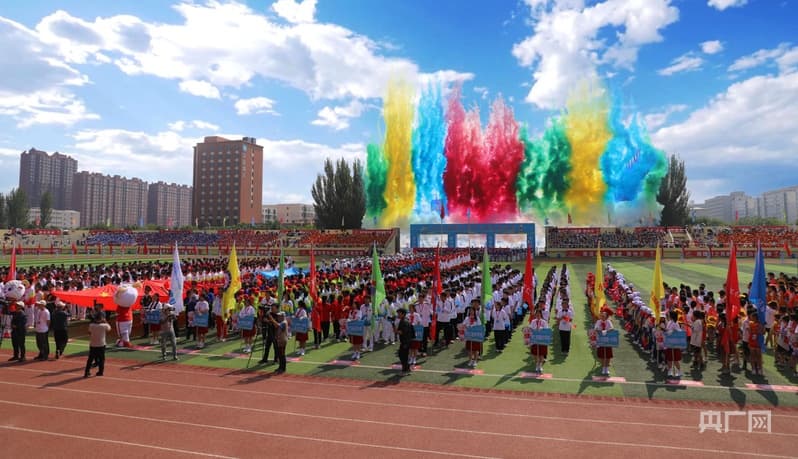
For a buyer, a production district is worth using when it offers side-by-side comparability and complete local support. Huairen concentrates 118 value-chain companies and 123 production lines with 35 billion pieces of annual capacity, spanning more than 20 series and over 2,000 varieties; its dailyware accounts for roughly 8% of the comparable national market and ranks in China's top ten by volume. The more practical point is that the supporting chain is local: raw materials, forming, decal firing, packaging, ceramic machinery, kiln furniture, kiln construction, mould making and transfer-paper design all sit in the same district, so changing a pattern, a mould or a pack format needs no cross-province coordination, keeping sampling time and change costs controllable. On export, around 50% of output goes to Europe, the Americas, Central Asia and the Middle East; 2025 exports exceeded RMB 200 million, up 30% year on year, reaching more than 30 countries and territories. The district has signed a cross-border ecommerce agreement with Alibaba.com and organises outbound trade through nodes including the Yiwu global sourcing centre and a Linyi cloud warehouse.
Sources
- GB 4806.4-2016 National Food Safety Standard — Ceramic Ware ↗
- Summary of national ceramic controls (China, EU, US limits) ↗
- Market access for ceramic tableware, including US producer certification ↗
- EU/US testing and compliance guide for tableware (LFGB, ASTM, ISO 6486) ↗
- GB/T 13522-2024 Bone China and its referenced test standards ↗
- China.com.cn: district scale, export mix and the Yiwu hub ↗